
I started at WPX answering support tickets. 6 years later I’m the COO.
I spent my university summers in the US on a student visa, working the kind of jobs that teach you persistence and what hard work actually means. Then I came home, finished my degree, and joined a small hosting company in Sofia as a junior support agent.
The team was ten people. Tickets, chats, every technical problem a customer had with their site. The company had bet on support being the reason people stayed, which made the support team the product.
Our manager was trying to build the training and onboarding system that bet required. I got close with him and started helping where I could, mostly by trying to pinpoint where we were hurting most. I didn’t know the first thing about managing people.
Then he stepped down and left to start something of his own.
I was running the biggest team in the company. No hiring strategy, no training system, no onboarding, and close to no leadership skills.
What happened after?
Every fix bought me time for the next one.
First I needed help so I got my number 2 to be my assistant. Then we fixed hiring and training, because that’s where we were bleeding.
The harder part was learning to lead the team we’d just built. The difficult conversations. The feedback nobody wants to give. Monthly 1:1s with people who were growing faster than our systems were.And the team kept growing.
80% of our combined time was going into hiring and training, which left almost nothing for the people already here. So we brought in a trainer. Someone with deep knowledge and enough patience to give new people a running start.
That gave us our time back. We spent it writing proper procedures. Then on the seniors, delegating real work to them and building them up. A lot of those people now lead other teams in the company. That’s the part I’m proudest of.
Then we rebuilt the company documentation from scratch and standardized it. It’s a knowledge base nobody here gets through a day without now.
The last thing I built in support was a management layer between the manager and the shift leaders, so the people above it could think about where we are going instead of what went wrong this morning.
Then I handed the team to my #2 to replace me and moved into the COO seat, with a bigger version of the same problem waiting.
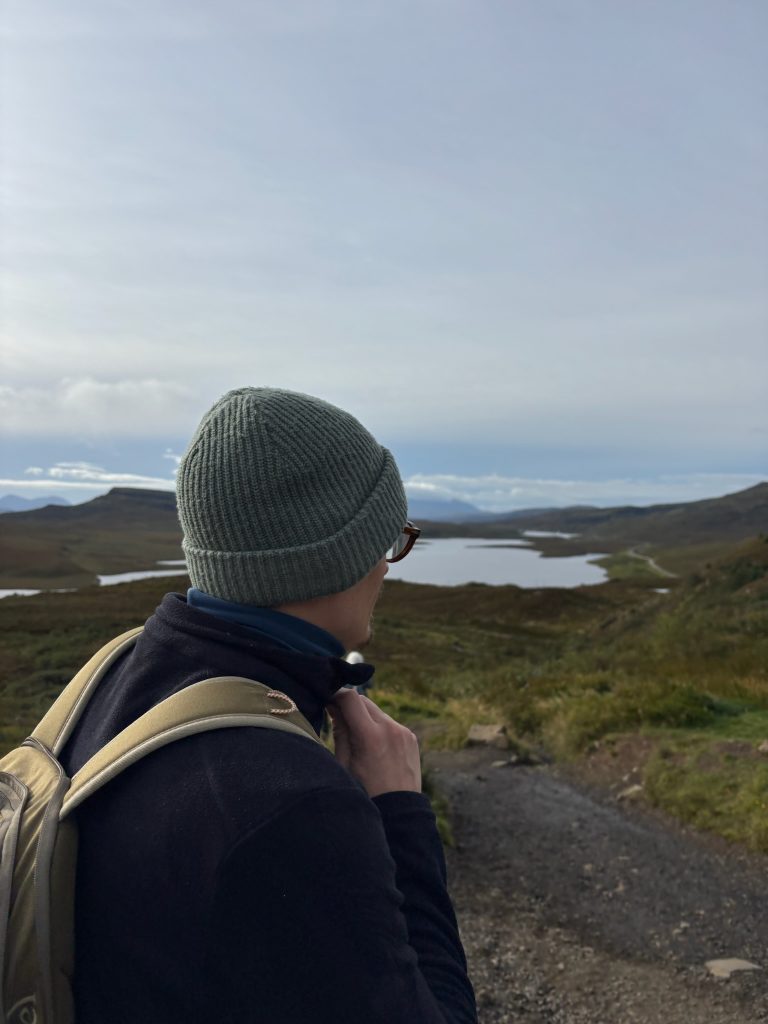
Outside of work, I’m usually moving.
I run. I hike. Occasional trail runs, which are mostly an excuse to be somewhere with no phone signal. And I’m happiest near the sea, snorkeling, paddling, swimming. Anything that puts me in the water.
The thing I like most is getting in the car and driving toward somewhere I’ve never been, on roads I don’t know, with no plan and no arrival time. What I’m actually doing is stopping. Some odd building, some view, some place that fascinates nobody but me and won’t appear in any guide.
I don’t think that’s a hobby so much as how I’m wired. I believe you can do almost anything if you try it and then stay on it, which sounds like a poster in an office until you’ve watched it work on something hard. Most people quit at the part where it stops being interesting. That’s usually about two steps before it starts working.
It’s the same thing I do with people. Everyone can see the obvious road. I’m interested in what’s just off it. Some of the best hires I ever made looked wrong on paper.

Most operational problems aren’t unfixable. They’re just uncomfortable.
The solution is usually sitting right in front of you. Taking it means a difficult conversation or a decision you’d rather not make, so it stays untaken and the process gets blamed instead.
The process is rarely broken. Somebody just doesn’t want to tell somebody else something true.
That’s where I’m useful. Not because I understand your business better than you do. Because I’m not the one who has to sit across from that person at lunch.
If the team side of your company has stopped making sense, tell me about it.
No pitch, no packages, no calendar funnel. Tell me what’s going on and I’ll tell you whether I think I can help. If I can’t, I’ll say that too.